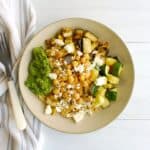
Roasted Veggie and Quinoa Bowls with Arugula Pesto
These roasted veggie and quinoa bowls make a flavor-packed lunch or dinner, and the recipe is great for meal prep.
Servings 5 servings
Calories 584kcal
Ingredients
For the pesto:
- 2 cups arugula, packed
- 2 cloves garlic
- ⅓ cup fresh shredded parmesan cheese (vegetarian if needed)
- ¼ cup olive oil
- ¼ cup pecans
- 2 tablespoons lemon juice
- ¼ teaspoon salt
For the quinoa veggie bowls:
- 2 medium zucchini, chopped
- 1 medium eggplant, chopped
- 2 tablespoons olive oil
- ¼ teaspoon salt
- 1 ¼ cup dry quinoa
- 15 ounce can of chickpeas, drained and rinsed
- ⅓ cup pistachios (more or less to taste)
- ½ cup crumbled feta (more or less to taste; vegetarian if needed)
Instructions
- Preheat the oven to 400 degrees F.
- Combine all the ingredients for the pesto in a food processor – the arugula, garlic, parmesan, olive oil, pecans, lemon juice, and salt. Process until well combined. Set aside for now.
- Add the zucchini and eggplant to a baking sheet(s). Drizzle with the olive oil and sprinkle with salt. Toss all the vegetables to coat evenly. (You may need two baking sheets depending on their size).
- Bake the vegetables at 400 degrees F for 15-20 minutes, tossing halfway through, until tender.
- Meanwhile, cook the quinoa according to package directions. Set aside for now.
- In a large bowl, add the cooked quinoa, roasted vegetables, chickpeas, pistachios, and feta. Stir until combined.
- Add the prepared pesto and toss well. Enjoy!
Notes
- Traditional parmesan and feta may not be vegetarian due to use of animal rennet in processing. If this is a concern for you, look for vegetarian brands that fit your needs.
- If you are looking for a higher protein option, feel free to add roasted tofu, shelled edamame, cooked chicken breast, or sauteed shrimp to this recipe. You can use this in addition to or in place of some of the chickpeas.
- Feel free to slightly adjust aspects of this to fit your dietary needs. For example, if you need less sodium, cut the salt a bit. If you need a lower fat meal, you can use a little less olive oil in the pesto, and cut the cheese a bit. It’s a flexible recipe!
Nutrition
Calories: 584kcal